
Posthumous Births: Conception After Death

Posthumous Births: Conception After Death

Section 8.1 of WESA provides as follows:

8.1 (1)      A descendant of a deceased person, conceived and born after the person’s death, inherits as if the descendant had been born in the lifetime of the deceased person and had survived the deceased person if all of the following conditions apply:

(a)        a person who was married to or in a marriage-like relationship with, the deceased person when that person died gives written notice, within 180 days from the issue of a representation grant, to the deceased person’s personal representative, beneficiaries and intestate successors that the person may use the human reproductive material of the deceased person to conceive a child through assisted reproduction;

(b)        the descendant is born within 2 years after the deceased person’s death and lives for at least 5 days;

(c)        the deceased person is the descendant’s parent under Part 3 of the Family Law Act.

(2)        The right of a descendant described in subsection (1) to inherit from the relatives of a deceased person begins on the date the descendant is born.

(3)        Despite subsection(1)(b), a court may extend the time set out in that subsection if the court is satisfied that the order would be appropriate on consideration of all relevant circumstances.

Unlike section 8, which applies specifically to intestacy, section 8.1 applies to both testate and intestate estates.

Reproductive Genetic Material is Property

Lam v. University of British Columbia, 2015 BCCA 2, held that human sperm or ova stored for reproductive purposes are property.

Lam was a representative plaintiff of a class of cancer patients who, before taking radiation treatments, had stored their frozen sperm at the defendant’s laboratory.

All of the stored sperm was destroyed by reason of a power interruption. One of the issues at trial was whether the plaintiff had ownership of his sperm such that he could contract for its storage to enable his personal use of the sperm at a later date.

The court found that the sperm was included in the definition of “goods” under the Warehouse Receipt Act, that the storage facility was bound by the terms of that Act, and that its exclusion clause was unenforceable.

Consent After Death

In K.L.W. v. Genesis Fertility Centre, 2016 BCSC 1621, the court granted an application brought by a widow that her late husband’s human reproductive material was her sole legal property and that it should be released for her use absolutely to create embryos.

The deceased had not given his written consent but had stored sperm during his lifetime.

The deceased had suffered with severe medical conditions throughout his life, but he and his wife strongly wanted to have a family. They agreed that the wife would use his reproductive material to conceive a child, regardless of whether or not he died.

The deceased was unaware and had not been told that he had to provide written consent to his wife’s use of his reproductive material for the purpose of creating an embryo, as required by the AHRA and its regulations. He died without having given such consent.

The deceased died intestate. The court found that he had rights of use and ownership in his reproductive material sufficient to make it property, and that on his death that property and reproductive material vested in his wife as his spouse and the sole beneficiary of his intestate estate.

The deceased had freely and repeatedly expressed his consent to his wife’s use of his reproductive material following his death, and he expressed his consent after he had the benefit of professional consultations

The court held that to deny the wife the use of his reproductive material intended by the deceased would be unfair and an affront to her dignity.

Accordingly, the court ordered that her late husband’s reproductive material be released to the wife for her use to create embryos.

The Genesis case was distinguished and not followed in L.T. v. D.T. Estate (Re), 2019 BCSC 2130. In that case the court, after hearing lengthy argument, dismissed an application by a widow that human reproductive material from her deceased husband be removed from his body, stored, and used to create embryos for the reproductive use by the widow and for no other or improper purpose.

The matter was initially urgently heard within hours after the deceased’s death in October 2018. The court allowed reproductive material to be taken from the deceased’s body and stored, pending final legal argument.

The court reluctantly came to the conclusion that the AHRA requires an individual to formalize his or her informed consent in writing if he or she wishes to permit the posthumous removal of his or her reproductive material.

The Genesis case was not followed on the basis that the deceased in that case had provided reproductive material during his lifetime to be used after his death, for the creation of an embryo. By contrast, in the L.T. case, the deceased was a young married man with one child who unexpectedly died intestate without providing his written consent or leaving any reproductive material during his lifetime.

Conclusion

“En ventre sa mère” case law has been well settled and the new frontier of litigation concerning children born after death involves the access to and use of reproductive material of both sexes. As reproductive technology becomes more advanced and available, I would expect that access to the use of stored sperm and ova will increasingly be the subject of both family law and estate litigation, as well as estate planning.

Overcoming the Presumption of Indefeasible Title

Overcoming the Presumption of Indefeasible Title

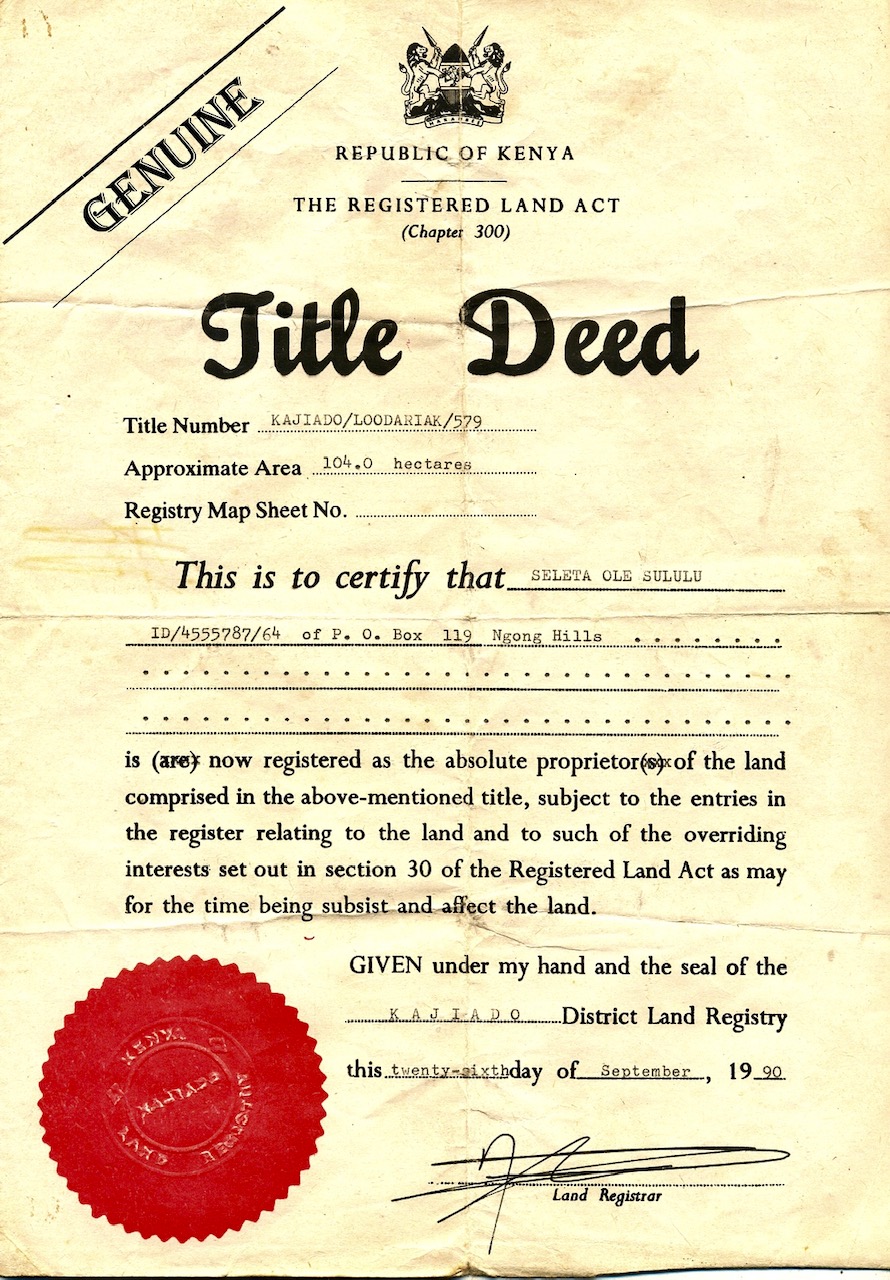
Estate disputes frequently involve issues relating to who is the true beneficial owner of a property due to a myriad of fact patterns, and the legal arguments invariably refer to the presumption of legal and beneficial ownership of indefeasible title.

The first thing any lawyer will do in any dispute as to the legal vs beneficial ownership of a parcel of property is to conduct a land title search.

British Columbia uses the Torrens property regime, and section 23(2) Land title Act creates a statutory presumption that the registered owner on title is presumed to be the legal and beneficial owner of the property.

Fellowship Deaconry Association of BC v Fellowship Deaconry Inc. 2019 BCSC 1476 dealt with a dispute of “ownership” – the plaintiff  Church asserting that the defendant held the property in trust for the Church . The defendant relied inter alia on the presumption of S. 23(2) Land Title Act, that the defendant as registered owner was the presumed legal and beneficial owner of the property.

Like any presumption in law, contrary evidence will often overcome the presumption, and the same section 23(2) of the Land Title act provides three options in which the presumption may be rebutted:

1) The operation of a resulting trust, which may be inferred where no value is given for a legal interest;
2) the operation of an agreement between the parties that is contrary to the registered legal title;
3) taking into account the underlying equitable interests between the parties ( for example, a claim such as unjust enrichment)

Most estate disputes involve the law of resulting trust, and while the Deaconry case did review the law of resulting trusts, it ultimately decided the case on the basis of the parties intention based on a review of correspondence and conduct prior to and at the time of the purchase of the property.

In the Deaconry decision , the court ultimately decided it did not have to result to the presumption of resulting trust, as the court found after a review of the evidence and correspondence, that the defendant did not intend to retain a beneficial interest in the church, and that legal title was transferred to the defendant until some agreement about repayment had been reached or fulfilled. The court found that this was the mutual intention of both parties that both the time of the purchase and when title was transferred in 1971.

The court specifically found that the evidence was sufficient to establish the three certainties necessary to create a trust, namely :

1) certainty of intention,
2) certainty of the object of the trust,
3) certainty of subject matter of the trust.

With respect to the law relating to the three certainties necessary to create a trust, the court referred to Norman Estate v . Watchtower Bible and Tract Society of Canada, 2014 BCCA 277 at paragraph 35.

S.46 WESA: When Gifts Cannot Take Effect

S.46 WESA: When Gifts Cannot Take Effect

S.46 WESA applied to the following simple fact pattern that I recently met:

A will left everything to my children in equal shares, share and share alike. One child had predeceased the will-maker, leaving two children.

Applying the provisions of S46 WESA effected that the predeceased child’s share went to his two children, ie the grandchildren of the deceased.

S.46 WESA states:

46.(1) if a gift in a will cannot take effect for any reason, including because a beneficiary dies before the will-maker, the property that is the subject of the gift must, subject to a contrary intention appearing in the will be distributed according to the following priorities:

A) to the alternative beneficiary of the gift, if any, named or described by the will-maker, whether the gift fails for a reason specifically contemplated by the will-maker or for any other reason;

B) if the beneficiary was the brother, sister or a descendant of the will-maker, to their descendants, determined at the date of the will-maker’s death, in accordance with section 42(4) ( meaning of particular words in a will)

C) to the surviving residuary beneficiaries, if any, named in the will, in proportion to their interests.

(2) If a gift cannot take effect because a beneficiary dies before the will-maker, subsection 1 applies whether the beneficiary’s death occurs before or after the will is made.

Terezakis Estate 2018 BCSC 805 discusses section 46 of WESA relating to an interpretation of the residue of a will that dealt with its interpretation with respect to two of five children who had predeceased the will maker.

The two children who had predeceased the will maker also left children.

The residue clause of the will was confusing as to whether it was the intention of the will maker to leave the share of any child who might have predeceased the testator to the children of the predeceased children ie to the grandchildren of the deceased.

The court applied the armchair rule of construction that requires the court to put itself in the position of the testator at the time when the will was made and to construe the language from the vantage point in order to determine the actual or subjective intent of the testator –Re Burke (1960) O.R. 26 (C.A.).

The court noted that the will information sheet reflected that the testator presumed wishes to ensure that her grandchildren receive a share of the residue of her estate in the event that any of her children predeceased her. This was the expressed intention of the testator at the time the will was drafted, and the court applying the rule armchair rule, stated that it was the best evidence upon which the will should be interpreted by the court.

The court referred to both sections 42 and 46 of WESA.

Section 42 WESA states:

42. This section is subject to a contrary intention appearing in a will.

42(4)  gifts of property to a class of persons that:

a) is described as a will makers issue or descendants, or by a similar word and
b) b) encompasses more than one generation of beneficiaries, must be distributed as if it were part of an intestate estate to be distributed to descendants.

The court was also mindful of the presumption that a testator does not intend to create an intestacy- Milwarde-Yates v Sipila 2009 BCSC 277 at para. 49.

S.46 WESA states:

1) if gifts in a will cannot take effect for any reason, including, because of beneficiary dies before the will maker, the property that is subject of the gifts must, subject to a contrary intention appearing in the will, be distributed to the following priorities:

a) to the alternative beneficiary of the gifts, if any, named are described by the will maker, whether the gifts fail for a reason specifically contemplated by the will maker, or for any other reason;

b) if the beneficiary was the brother, sister, or a descendent of the will maker, to their descendants, determined that the date of the will maker’s death, in accordance with section 42(4) WESA (that refers to the particular words in a will);

S 46(2) states:

2) if gifts cannot take effect because of beneficiary dies before the will maker, subsection(1) applies whether the beneficiary’s death occurs before or after the will is made.

The court accordingly ordered that the distribution of the estate be made equally among her children and grandchildren, being the grandchildren of the predeceased children.

S. 58 WESA: Fixed Intention of Asset Disposal Required

S. 58 WESA: Fixed Intention of Asset Disposal Required

Re Cook Estate 2019 BCSC 417 applied Hadley Estate 2017 BCCA 311 that the applicable test under section 58 WESA has two main parts:

1) whether the record, document or writing is authentic and,

2) whether the record, document or writing represents the deliberate or fixed and final intention of the deceased person.

Section 58 of WESA is a broad curative provision that allows the court to have the discretion to validate a document that is not been made in compliance with the formalities of will making as found in section 37 WESA, and allows the document to be admitted to probate, if satisfied that the document represents the testamentary intentions of the will maker.

The purpose of the remedial provision is to avoid the defeat of a will makers genuine intentions due to some technical defect.

The Court of Appeal in Hadley Estate approved of the following passage from the Estate of Young 2015 BCSC 182:

“Testamentary intention means much more than the expression of how a person would like his or her property to be disposed of after death. The key question is whether the document records a deliberate or fixed and final expression of intention as to the disposal of the deceased property on death. A deliberate or fixed and final intention is not the equivalent of an irrevocable intention, given that a will, by its nature is revocable until the death of its maker. Rather, the intention must be fixed and final at the material time, which will vary depending on the circumstances.

The Young Estate ibid. at paragraph 36 listed relevant factors to consider:

“ A wide range of factors may be relevant to establishing the deceased testamentary intentions in the particular case. Although context specific, these factors may include the presence of the deceased signature, the deceased’s handwriting, witness signatures, revocation of previous wills, funeral arrangements, specific bequests, and the title of the document.

Other factors identified in the authorities also include whether the language in the document connotes a sense of finality, or is precatory ( non binding words such as “wish” or “hope for”) in nature. Lane Estate 2015 BCSC 2162

Marriage-Like Relationships: Are You a Spouse?

Marriage-Like Relationships: Are You Considered Their Spouse?

Robledano v Queano 2019 BCCA 150 clarified the law with respect to the definition of spouse after two years living together in a marriage like relationship by stating that there was no necessity for the two years living together need be immediately preceding the deceased’s death.

The appeal court rejected the argument that an unmarried person can only be a spouse of a deceased person if they were living together at the time of death, and for at least two years immediately preceding.


The court referred to the definition of spouse under WESA:

2(1) unless subsection 2 applies, to persons or espouses of each other for the purposes of this act if they were both alive immediately before relevant time and:

a) they were married to each other, or

b) They had lived with each other in a marriage like relationship for at least two years.

(2) to person B been spouses of each other for the purposes of this act if:

A) In the case of a marriage, an event occurs that causes an interest in family property, as defined in part five of the family law act to arise, or

B) in the case of a marriage like relationship, one or both persons terminate the relationship.

To amplify the court’s reasoning as to the meaning of paragraph 2(1) (B) of WESA, the court examined the history of the British Columbia Law Institute, commenced in 2003, known as the Succession Law Reform Project. That project culminated in June 2006, entitled Wills, Estates and Succession: a Modern Legal Framework which was the draft of WESA.


The draft provision for which subsection two derived was in the following terms:

1.(2) for the purposes of this act, to persons or espouses of each other at a relevant time if, immediately before the relevant time, they

a) were married to each other, or have lived and cohabited with each other at anytime for a period of at least two years in a marriage like relationship.

The court seized on the word anytime and stated that there was no reason to believe that any change in the substance of this provision was intended when the draft attached to the institutes report was transformed into a bill.

The court also interpreted the words “had lived together” to be in the past perfect tense rather than the continuous tense  “were living together”. The statue was professionally drafted and the use of the different tenses should be presumed to be deliberate.

Spouse: Two Year Marriage-Like Relationship

Spouse: Two Year Marriage-Like Relationship

Robledano v Queano 2019 BCCA 150 clarified the law with respect to the definition of spouse after two years living together in a marriage like relationship by stating that there was no necessity for the two years living together need be immediately preceding the deceased’s death.

The appeal court rejected the argument that an unmarried person can only be a spouse of a deceased person if they were living together at the time of death, and for at least two years immediately preceding.

The court referred to the definition of spouse under WESA:

2(1) unless subsection 2 applies, to persons or espouses of each other for the purposes of this act if they were both alive immediately before relevant time and:

a) they were married to each other, or

b) They had lived with each other in a marriage like relationship for at least two years.

(2) to person B been spouses of each other for the purposes of this act if:

A) In the case of a marriage, an event occurs that causes an interest in family property, as defined in part five of the family law act to arise, or

B) in the case of a marriage like relationship, one or both persons terminate the relationship.

To amplify the court’s reasoning as to the meaning of paragraph 2(1) (B) of WESA, the court examined the history of the British Columbia Law Institute, commenced in 2003, known as the Succession Law Reform Project. That project culminated in June 2006, entitled Wills, Estates and Succession: a Modern Legal Framework which was the draft of WESA.

The draft provision for which subsection two derived was in the following terms:

1.(2) for the purposes of this act, to persons or espouses of each other at a relevant time if, immediately before the relevant time, they

a) were married to each other, or have lived and cohabited with each other at anytime for a period of at least two years in a marriage like relationship.

The court seized on the word anytime and stated that there was no reason to believe that any change in the substance of this provision was intended when the draft attached to the institutes report was transformed into a bill.

The court also interpreted the words “had lived together” to be in the past perfect tense rather than the continuous tense  “were living together”. The statue was professionally drafted and the use of the different tenses should be presumed to be deliberate.

Removal of a Judge for Bias

Siemens v Howard 2016 BCSC 2700 discusses the law for removal of a Judge as a result of alleged bias.

In the Siemens decision the trial began but could not be completed within the time available, and a date was set for the continuation. In the interim, the plaintiff brought an application seeking disqualification and removal of the trial judge on the basis of reasonable apprehension of bias, and sought an order that the matter be remitted for a new trial.

The plaintiff’s complaint was that the trial judge worked for seven or eight months in the same firm as plaintiff’s counsel, even though the judge disclosed this fact prior to the trial commencing.

The judge and the lawyer  were not friends, and at best were fleeting workmates.

The application was dismissed as the plaintiff failed to demonstrate, by cogent evidence, serious grounds required to rebut the strong presumption of impartiality by judges.

De Cotiis v De Cotiis 2004 BCSC 17 stated that counsel should not be hesitant in arguing that such an apprehension exists, and to do so is not in any way disrespectful of the judge, but is instead helping to determine whether or not there is a reason for recusal. On the other hand, if there is no reasonable basis for any apprehension of bias, a client’s preference the judge not sit is not of any moment.

The court went on to state that it is the duty of the judge to hear cases that come before him or her, and a party should not be able to unilaterally choose not to have a matter heard by a particular judge simply because that party would prefer that another judge hear the case. If one party, without sound reason, is unable to unilaterally determine that a particular judge will not hear a case, it also tends to bring the administration of justice into disrepute.

A number of decisions have cautioned in the past, that judges must not yield to every angry objection or disgruntled  litigant. Judges have the duty to hear cases that come before them, and the important rights of the other litigants in the action are not to be sacrificed merely to assuage  the anxieties of unhappy parties.  Lesiczka v Shaota 2007 BCSC 479 at para. 23 and GWL Properties LTD v WR Grace of Canada Limited(1992 74 BCLR283 (BCCA)

With respect to the legal test, the Supreme Court of Canada in Roberts v R. 2003 SCC 45 held that the apprehension of bias must be a reasonable one, held by reasonable and right minded persons, applying themselves to the question, obtaining thereon the required information. In the words of the Court of Appeal, that test is” what would it informed person, viewing the matter, realistically, and practically, and having thought the matter through, conclude. What he or she think that it is more likely than not that the trial judge, whether consciously or unconsciously, would not decide fairly.

This objective test is to ensure not only the reality, but the appearance of a fair adjudicative process. The issue of bias is thus inextricably linked to the need for impartiality. Impartiality in the absence of the bias have developed is both legal and ethical requirements. Judges are required and expected to approach every case with impartiality and an open mind.

Because there is a strong presumption of judicial impartiality that is not easily displaced, the test for a reasonable apprehension of bias requires a real likelihood or probability of bias , and that a judge’s individual comments during a trial not be seen in isolation.

Allegations of perceived judicial bias will generally not succeed unless the impugned conduct, taken in context, truly demonstrates a sound basis for perceiving that a particular determination has been made on the basis of prejudice or generalizations. One overriding principle that arises from these cases is that the impugned comments or other conduct must not be looked at in isolation. Rather, it must be considered in the context of the circumstances, and in light of the whole proceeding

The reasonable person must be informed person, with knowledge of all the relevant circumstances, including the traditions of integrity and impartiality that form a part of the background, and apprised also of the fact that impartiality is one of the duties that judges swear to uphold- R v S (1997) 3 SCR 484 at para.111.

Appealing a Finding of Fact

Court Rewrites Man's Will to Include Daughters

I recently listened to oral argument in the Court of Appeal where the appellant’s counsel raised many significant arguments to the effect that the learned trial judge erred in the decision, only to have the Appeal Court state-that was a finding of fact.

The Court of Appeal on several occasions reminded the appellant counsel that findings of fact by the trial judge are very difficult to successfully appeal given the deference afforded lower court judges who have the opportunity to assess evidence, including cross examination, and determine the credibility of each witness.

In Parton v Parton 2018 BCCA 273 the appellant appealed the decision respecting the value of his business, arguing that the court declined to impose a minority discount on the valuation.

The appeal court confirm that the standard of review for findings of fact is highly deferential, causing an appellate court to interfere with the trial judge’s finding of facts only if there is an obvious and material error saving the Supreme Court of Canada decision Housen v Nikolaisen 2002 SCR 33.

The Supreme Court of Canada emphasize that appellant, in turn, the invention is only justified if the judge has made a manifest error, has ignored conclusive or relevant evidence, has misunderstood the evidence, or has drawn erroneous conclusions.

Toneguzzo Norvell v. Burnaby general Hopsitakl (1994) 1 SCR 114.

Disinherited Vancouver-S. 52 WESA- The Presumption of Undue Influence

Trevor Todd and Jackson Todd have handled estate disputes for over sixty combined years, including undue influence claims


Trudeau v Turpin Estate 2019 BCSC 150 is a recent decision dismissing a claim for undue influence and discussing in particular section 52 WESA and the presumption of undue influence that it sets out.

Section 52 of the Wills, Estates and Succession act WESA provides as follows:
52. In a proceeding, if a person claims that a will or any provision of that resulted from another person

a) Being in a position where the potential for dependents or domination of the will maker was present, and
b) using that position to unduly influence the will maker to make the will or the provision of it that is challenged,

and establishes that the other person was in a position where the potential for the dependents or domination of the will maker was present, the party seeking to defend the will or the provision of it that is challenged or to uphold the gift has the onus of establishing that the person is in the position where the potential for dependents or domination of the will maker was present did not exercise undue influence over the will maker with respect to the will or the provision of it that is challenged.


Undue influence is influence which over bears the will of the person influence, so that what he or she does is not his or her own act Longmuir v Holland 2000 BCCA 538 at 71.


Rebutting the Presumption of Undue Influence


In Stewart v McLean 2010 BCSC 64 the court summarized the legal approach to the question of whether the presumption of undue influence has been rebutted, at paragraph 97:

• To rebut the presumption of undue influence, the defendant must show that the donor gave the gift as a result of her own full, free and informed thought
• a defendant could establish by showing:
a) no actual influence was used in the particular transaction or the lack of opportunity to influence the donor;
b) the donor had independent legal advice or the opportunity to obtain independent advice;
c) the donor had the ability to resist any such influence
d) the donor knew and appreciated what she was doing
e) undue delay in prosecuting the claim, acquiescence or confirmation by the deceased
f) another factor may be the magnitude of the benefit or disadvantage

The statements of law were confirmed by the BC Court of Appeal in Cowpar-Smith v Morgan 2016 BCCA 200 at paragraphs 49 – 53.

In the Trudeau v tTurpin Estate decision, the court found that the plaintiff failed to establish that the defendant was in a position where the potential for dependents or domination of the will maker was present.

The court found that the evidence was overwhelming that the defendant did not exercise undue influence over the will maker.

In particular the court relied upon journal entries and various notes written by the deceased about her testamentary intentions. The court found them “illuminating”.

The evidence called by the defence was typical of undue influence defence testimony-and usually persuasive to the court, to demonstrate that throughout her adult life, the deceased was a stern, strong-willed, no-nonsense and domineering woman. She had strong points of view and unrelenting opinions and philosophies and was not easily dissuaded from them. She was well able to stand up for herself, defend her beliefs, and was quite prepared to assert her views. Anyone who defied her suffered her wrath.

S. 52 WESA: Presumption of Undue Influence Claims

S. 52 WESA: The Presumption of Undue Influence

Trudeau v Turpin Estate 2019 BCSC 150 is a recent decision dismissing a claim for undue influence and discussing in particular section 52 WESA and the presumption of undue influence that it sets out.

Section 52 of the Wills, Estates and Succession act WESA provides as follows:

52. In a proceeding, if a person claims that a will or any provision of that resulted from another person

a) Being in a position where the potential for dependents or domination of the will maker was present, and
b) using that position to unduly influence the will maker to make the will or the provision of it that is challenged, and establishes that the other person was in a position where the potential for the dependents or domination of the will maker was present, the party seeking to defend the will or the provision of it that is challenged or to uphold the gift has the onus of establishing that the person is in the position where the potential for dependents or domination of the will maker was present did not exercise undue influence over the will maker with respect to the will or the provision of it that is challenged.

Undue influence is influence which over bears the will of the person influence, so that what he or she does is not his or her own act Longmuir v Holland 2000 BCCA 538 at 71.

Rebutting the Presumption of Undue Influence

In Stewart v McLean 2010 BCSC 64 the court summarized the legal approach to the question of whether the presumption of undue influence has been rebutted, at paragraph 97:

• To rebut the presumption of undue influence, the defendant must show that the donor gave the gift as a result of her own full, free and informed thought
• a defendant could establish by showing:

a) no actual influence was used in the particular transaction or the lack of opportunity to influence the donor;
b) the donor had independent legal advice or the opportunity to obtain independent advice;
c) the donor had the ability to resist any such influence
d) the donor knew and appreciated what she was doing
e) undue delay in prosecuting the claim, acquiescence or confirmation by the deceased
f) another factor may be the magnitude of the benefit or disadvantage

The statements of law were confirmed by the BC Court of Appeal in Cowpar-Smith v Morgan 2016 BCCA 200 at paragraphs 49–53.

In the Trudeau v tTurpin Estate decision, the court found that the plaintiff failed to establish that the defendant was in a position where the potential for dependents or domination of the will maker was present.

The court found that the evidence was overwhelming that the defendant did not exercise undue influence over the will maker.

In particular the court relied upon journal entries and various notes written by the deceased about her testamentary intentions. The court found them “illuminating”.

The evidence called by the defence was typical of undue influence defence testimony-and usually persuasive to the court, to demonstrate that throughout her adult life, the deceased was a stern, strong-willed, no-nonsense and domineering woman. She had strong points of view and unrelenting opinions and philosophies and was not easily dissuaded from them. She was well able to stand up for herself, defend her beliefs, and was quite prepared to assert her views. Anyone who defied her suffered her wrath.